

A sprayer will be with you for many seasons, so it is worth taking your time to choose it. No single model is best for everyone: the right one depends on your crop, your farm, your tractor and the treatment you want to carry out. These are the seven things worth reviewing before you decide.
If you are not yet sure what a sprayer is and how it works, start with our guide What is an agricultural sprayer and how does it work?
1. The crop and the row spacing
This is the first thing to consider, because it determines almost everything else. The height and density of the canopy determine how much air you need and how far it has to reach. The distance between rows determines the width of machine that fits between them.
- Citrus and dense-canopy crops: they need a lot of air to reach the inside of the tree. This is where the Citrus fits in, with a double row of nozzles and three air channels, or a model with the Twister system.
- Olive, almond and fruit trees: the Twister S4, S5, S6 and S8 cover trees of different sizes. For fruit trees in intensive and super-intensive plantations there is the Twister Tower, with two tower-mounted fans.
- Trellised vines: the Twister Espaldera is specially designed for them.
- Overhead trellises, such as table grapes or kiwi: Twister Moon.
- Large trees, such as walnut or avocado trees: the Navarone series cannon, which blows the air over a long distance, can be single or double.
- Vegetables: Twister Low Crops, a mounted sprayer.
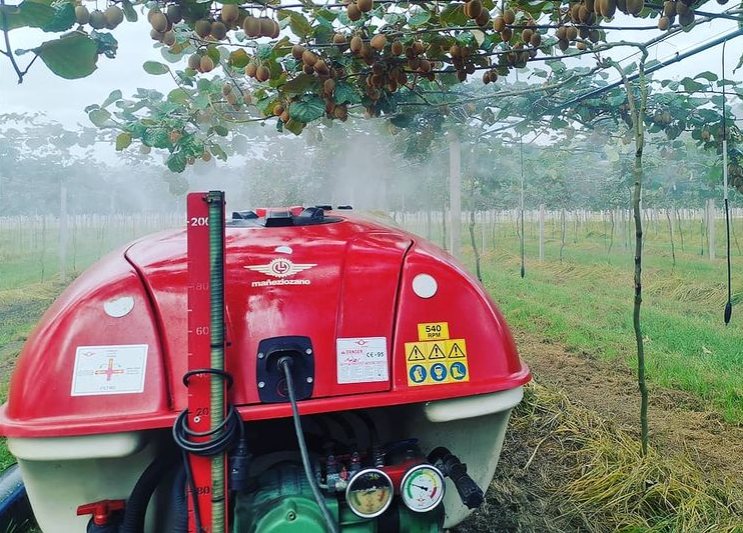
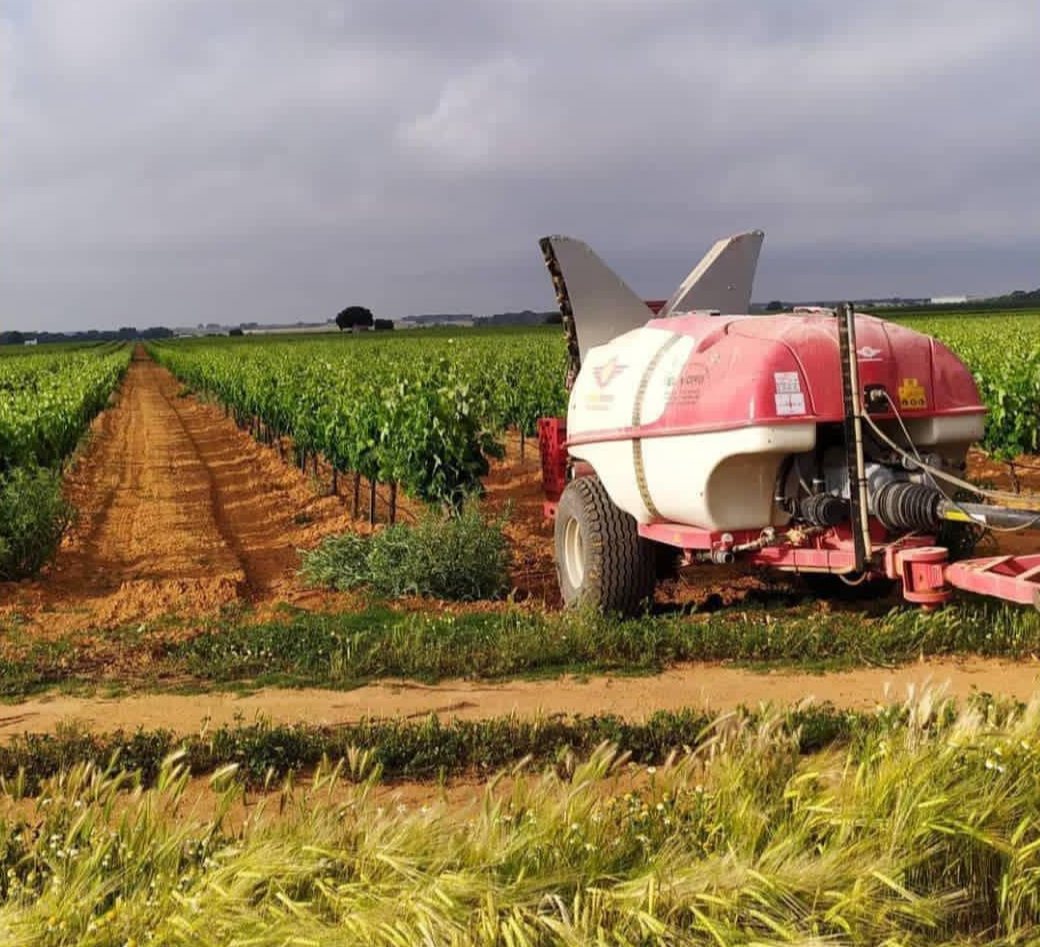
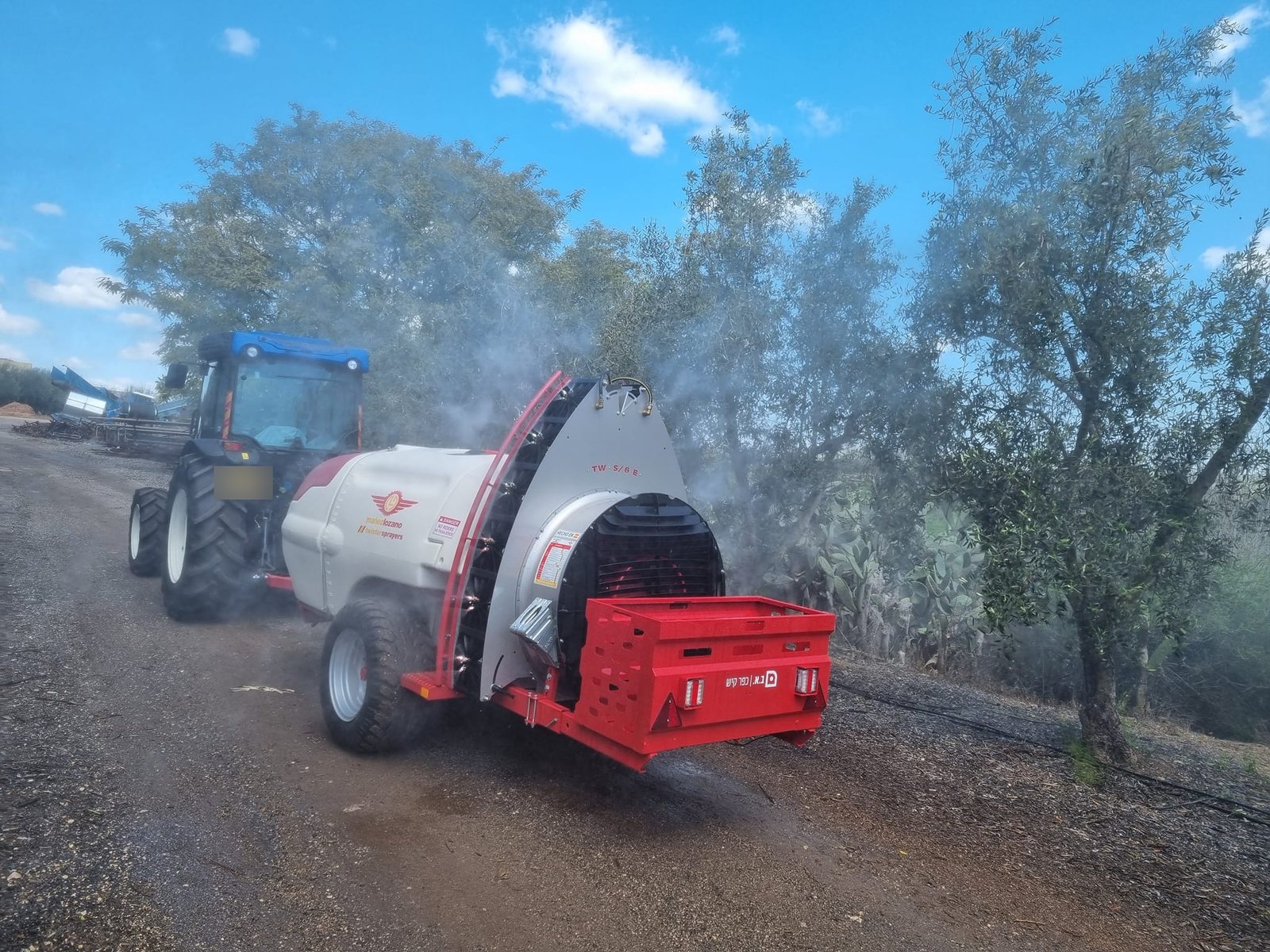
You will find more details on the page for each crop: citrus, olive groves, almond trees, fruit trees, vineyards, walnut trees and vegetables.
2. Farm size and tank capacity
The bigger the tank, the less often you stop to refill and the more hectares you treat in a day. To find out which capacity suits you, do this calculation: multiply the litres per hectare you apply by the hectares you treat in one go.
For example, if you apply 1,000 litres per hectare on a 6-hectare farm, you need 6,000 litres of spray mixture. With a 3,000-litre tank that is two fills; with a 1,000-litre tank, six.
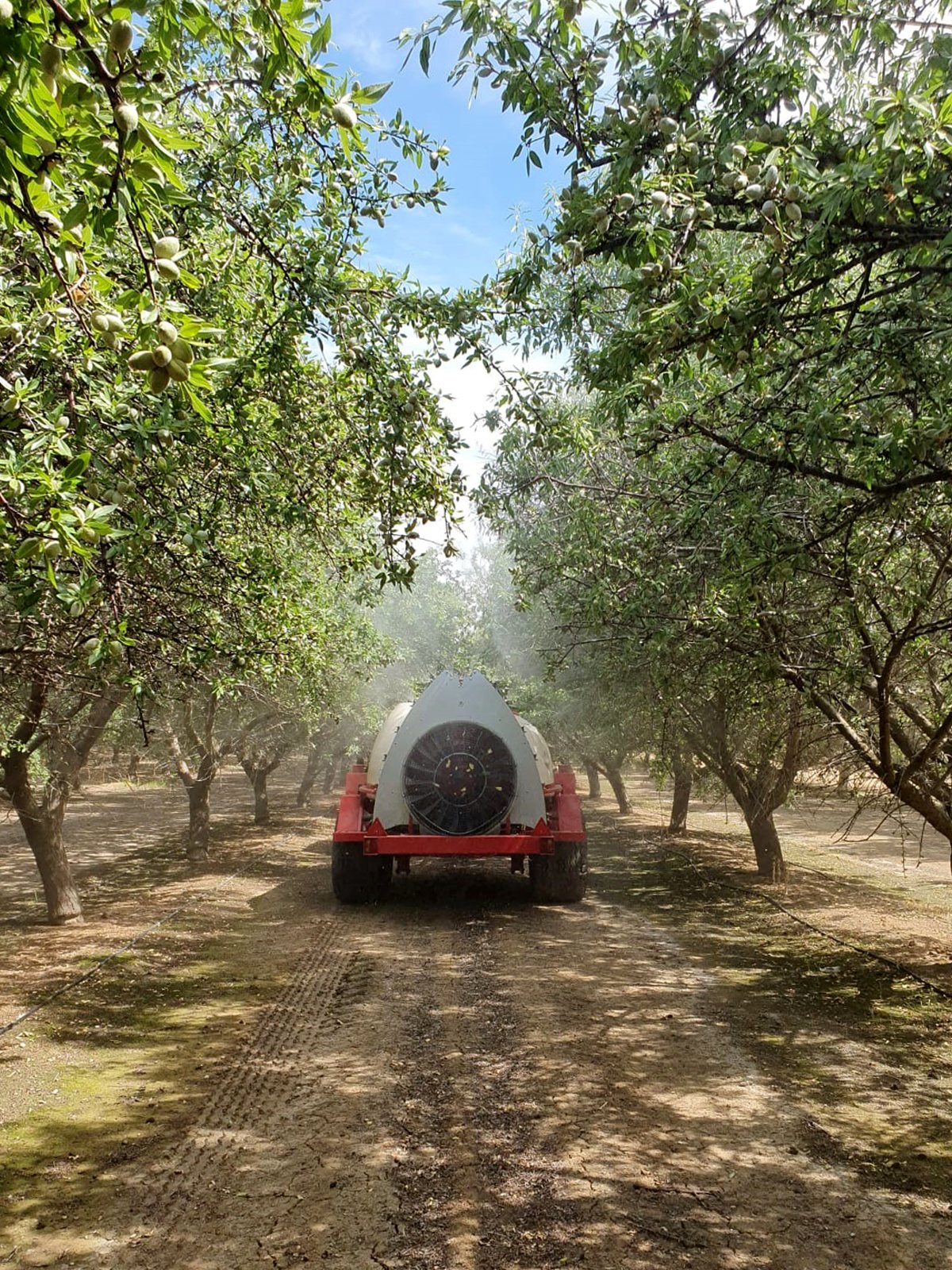
Our mounted sprayers range from 200 to 1,500 litres and our trailed sprayers go up to 4,000. But a bigger tank also means a longer, heavier machine: on small farms or with short headlands, it may not be worth it. To calculate the litres per hectare, use our litres per hectare calculator.
3. The tractor: power and width
The sprayer has to match the tractor you already have. There are two things to check:
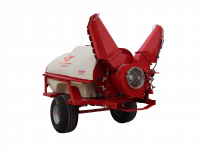
- Power. The fan and the pump are driven by the PTO, and each model requires a minimum power. In our trailed sprayers, the Narrow series works from 55 HP, the Mega from 70 HP and the Super from 85 HP. Mounted sprayers work with small tractors.
- Width. The machine has to pass along your rows without brushing the trees. The Narrow series starts at 116 cm wide, designed for narrow rows.
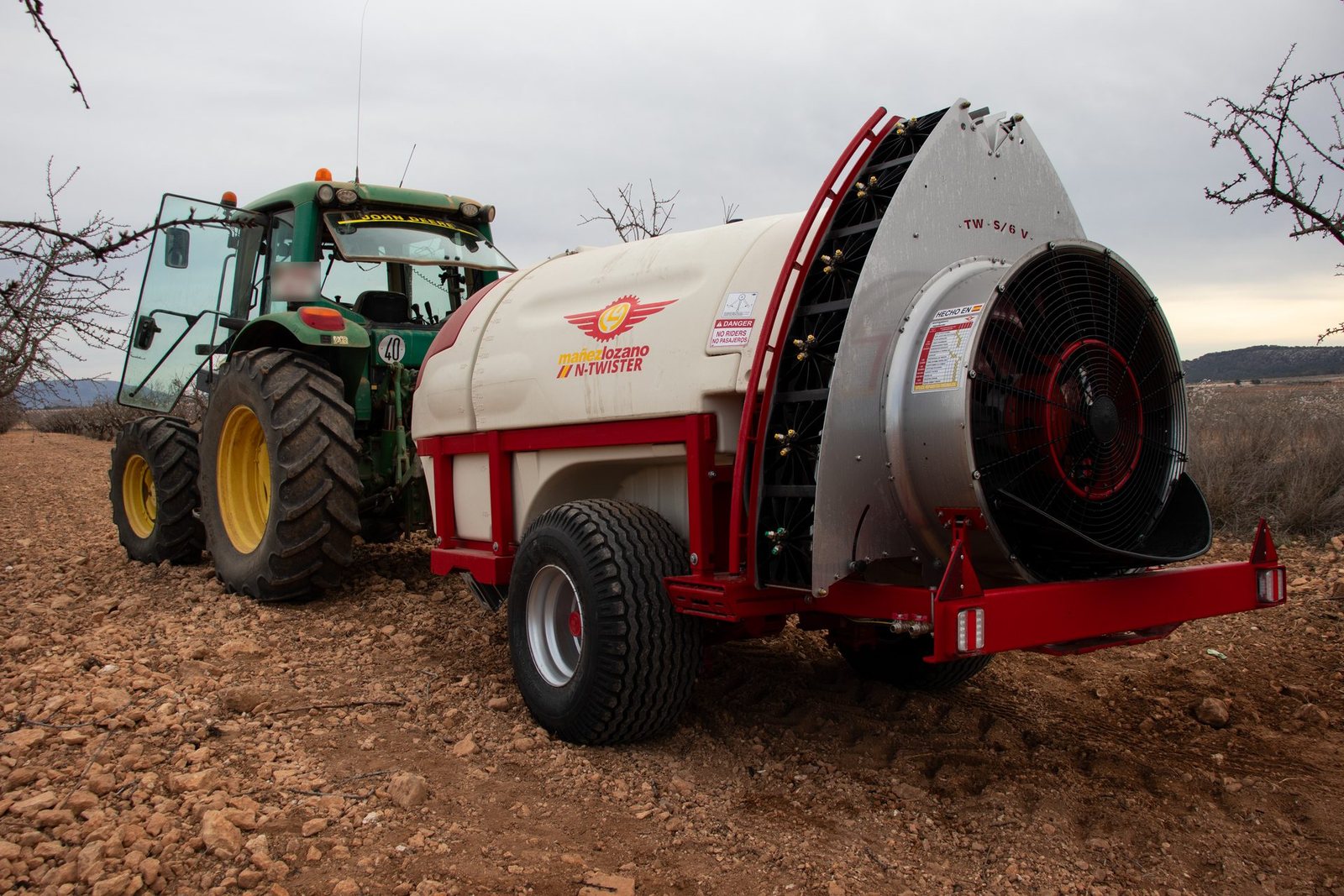
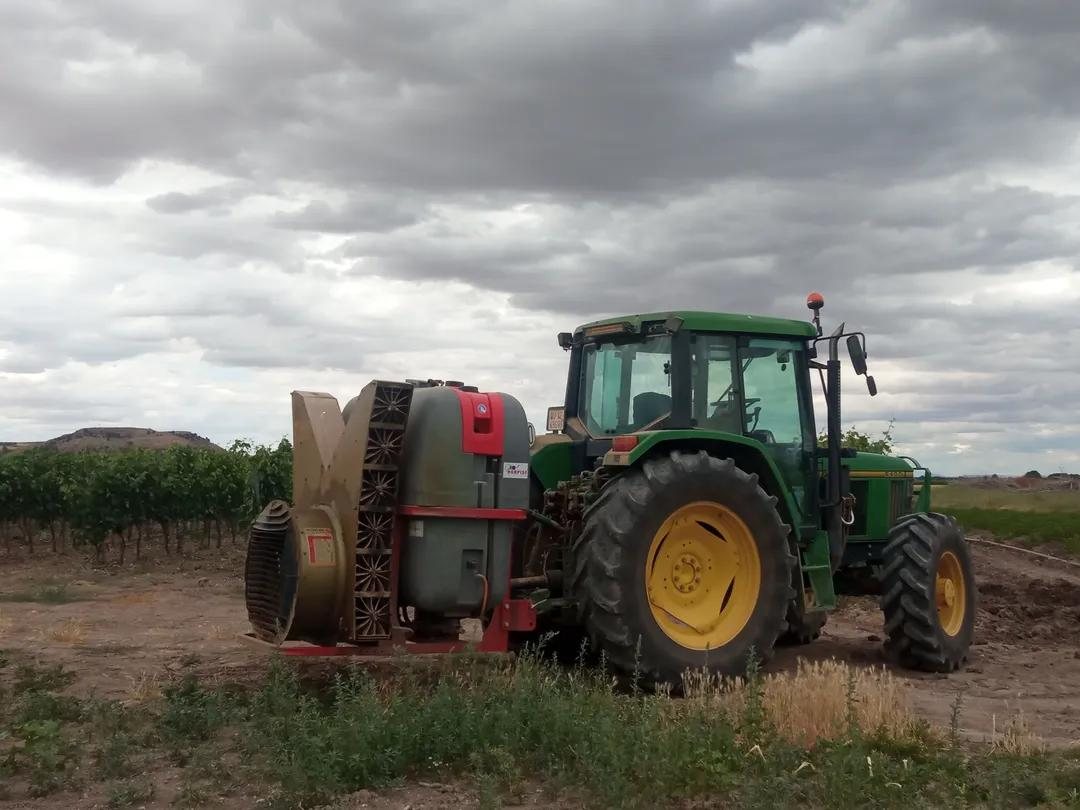
The differences between trailed and mounted sprayers are explained in our guide.
4. The air unit: conventional, Twister or cannon
The air unit is what carries the product to the leaf, and the quality of the treatment depends largely on it.
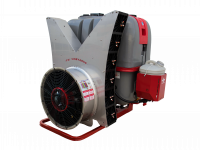
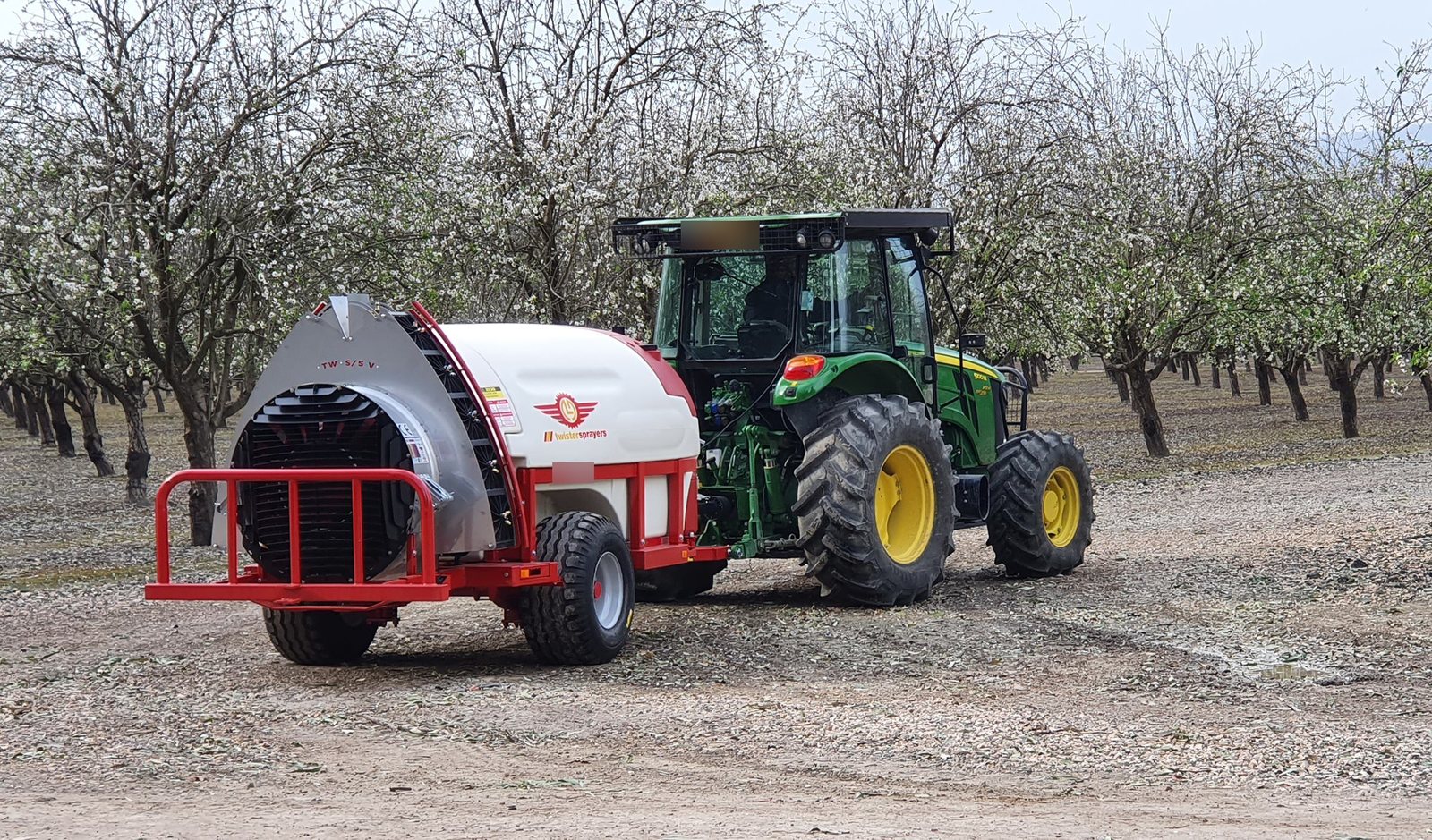
- Conventional (Dinamic and Citrus). It is more economical and is recommended for smaller plantations or those that do not need such precise product application.
- Twister system, patented by Mañez y Lozano. Spirals at the air outlet create a whirlwind that moves the leaves and gets the product onto the underside of the leaves as well. It is the option for plantations that need extra care.
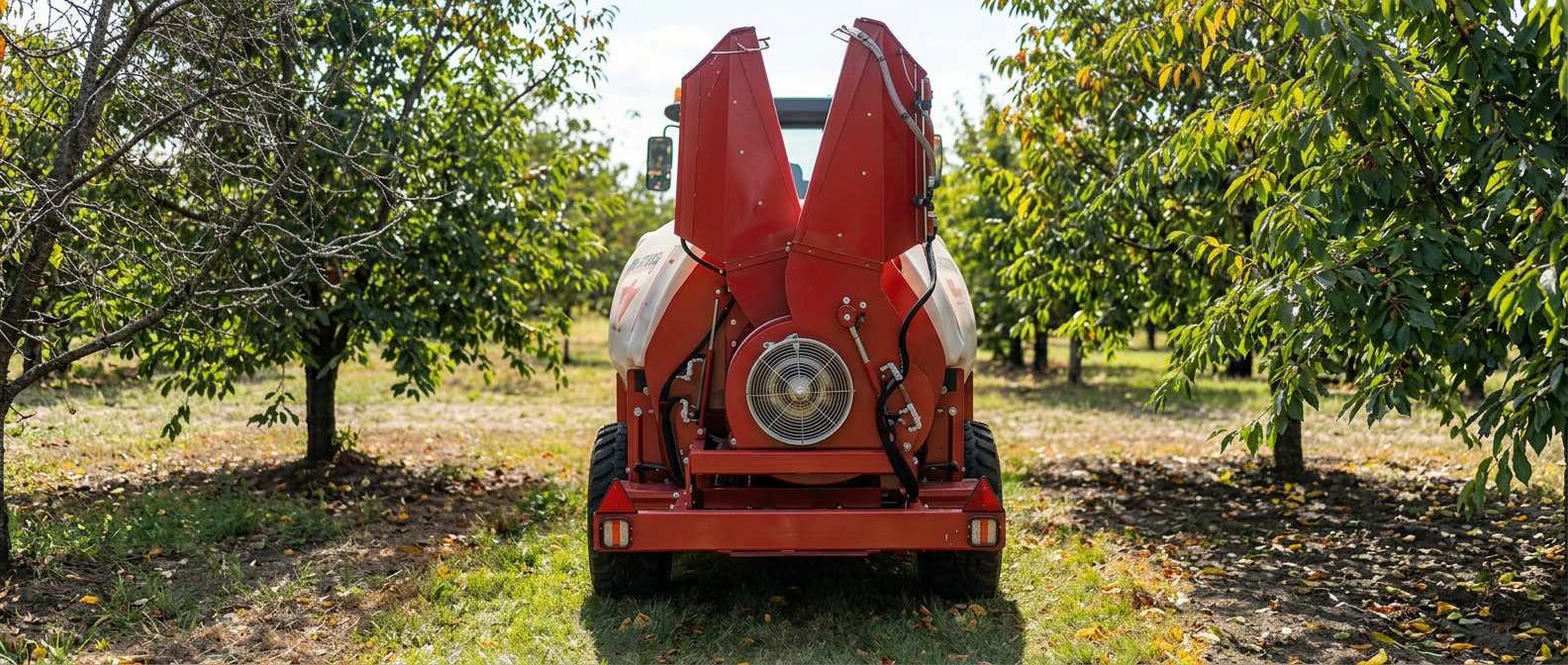
- Centrifugal cannon (Navarone series). It concentrates the air and blows it over a long distance, with a head that turns 270°. On the double cannon, the angle between the two cannons also opens and closes hydraulically.

5. The control unit: from manual to Sistronic 4.0
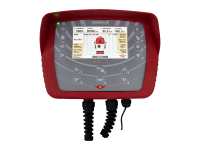
The control unit regulates the pressure and opens or closes the flow of spray mixture to the nozzles. The more automatic it is, the less the result depends on the operator’s skill.
- Manual. The operator regulates the pressure and opens or closes the outlets by hand. It is the simplest.
- ON-OFF electric. It opens and closes the sections from the tractor cab. A flow meter can be added.
- Tronic. With a flow meter and a pressure regulating valve, it keeps the litres per hectare constant even when the tractor speed changes.
- Sistromatic. Two sonars detect the trees on the right and left and only open the nozzles where there is vegetation, so no product is wasted.
- Sistronic 4.0. It combines both previous functions in a single control unit, with GPS, 4G connectivity and the AppMyL app to manage and monitor the spraying work.
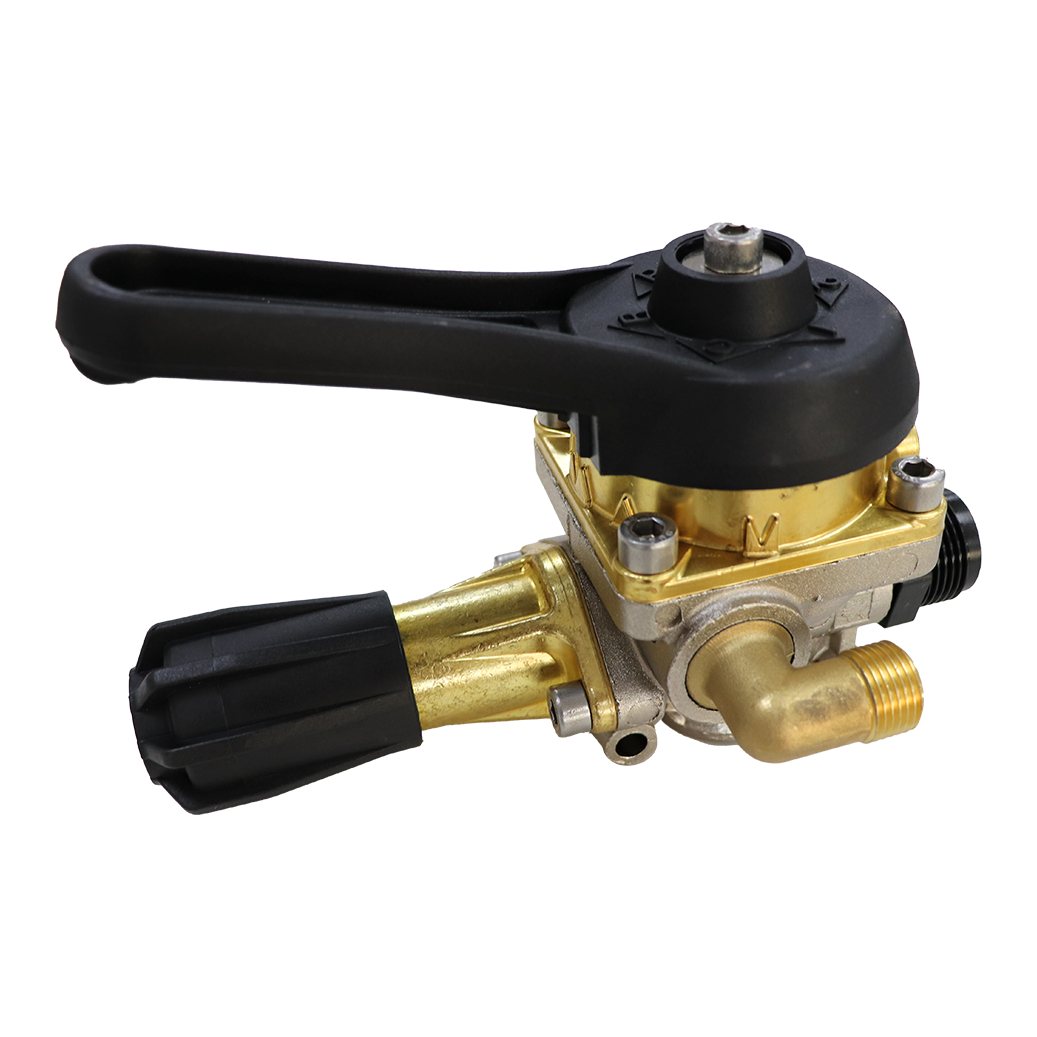
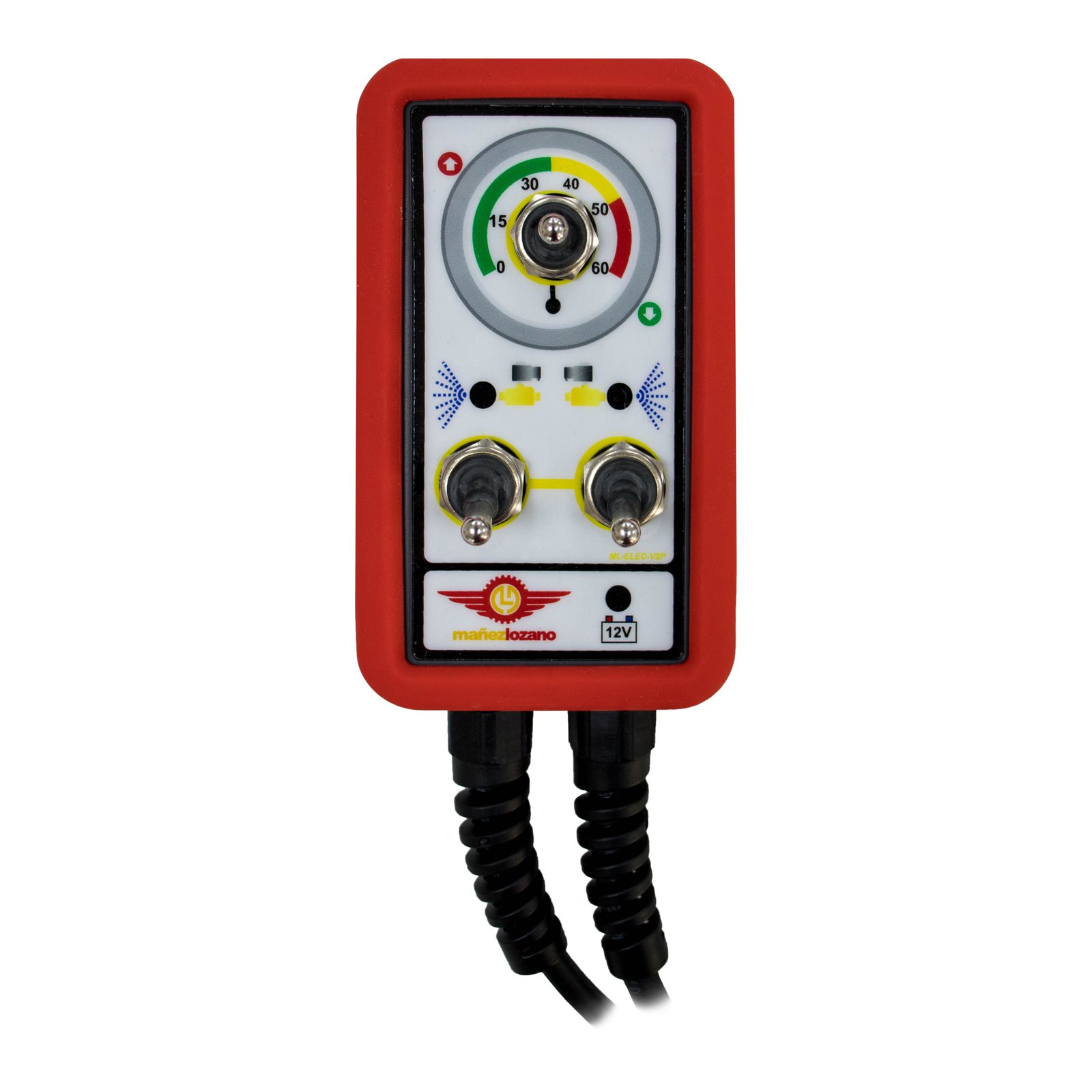
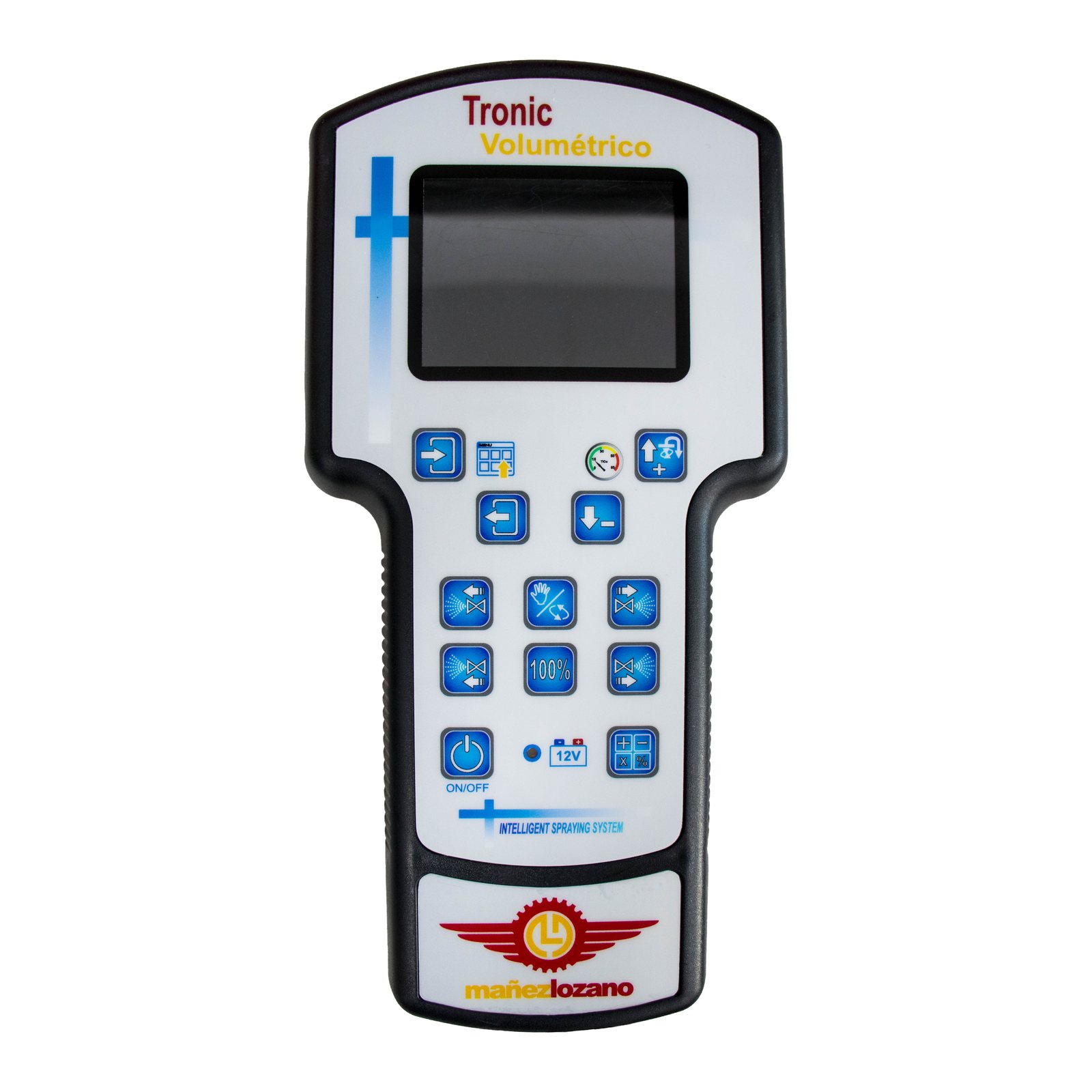
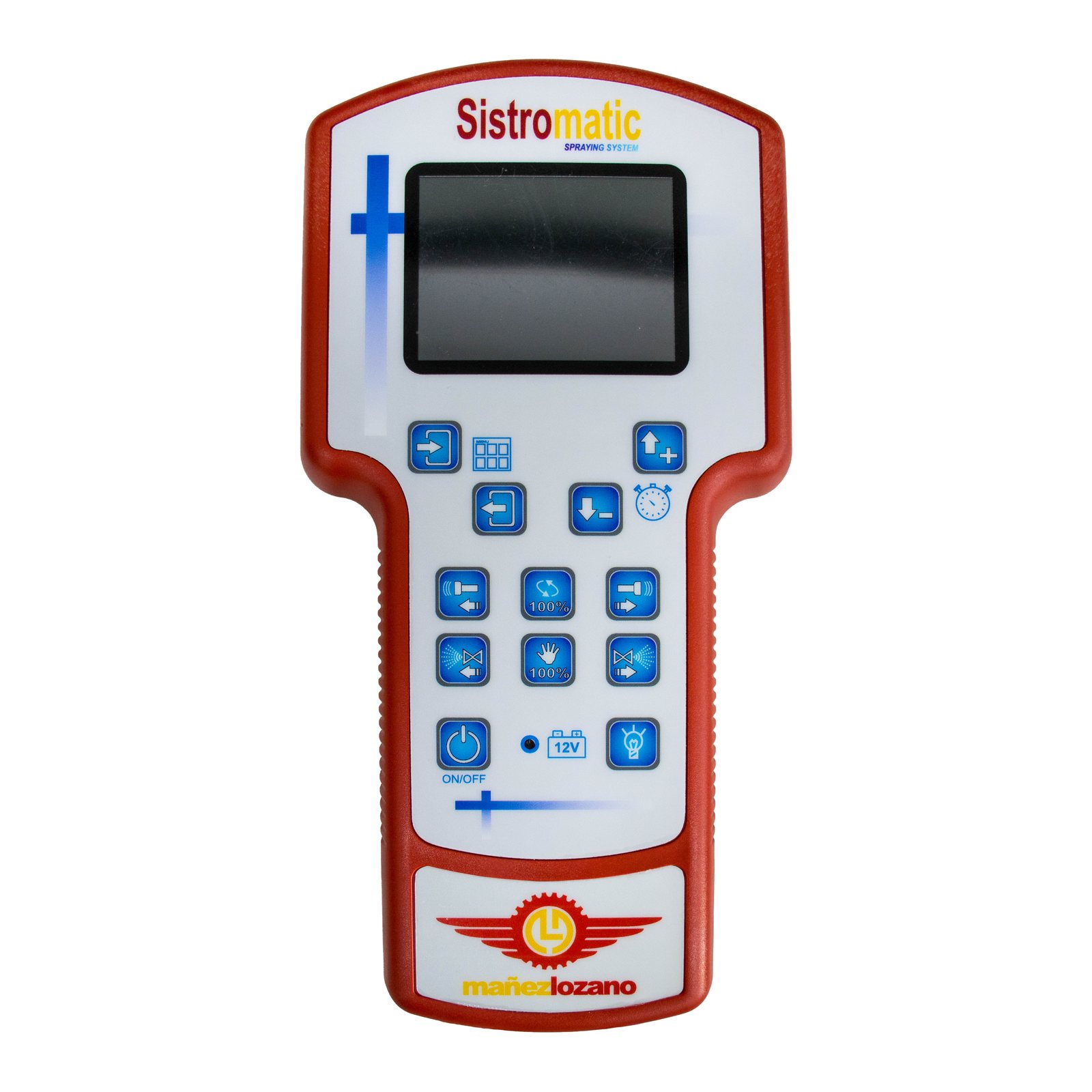
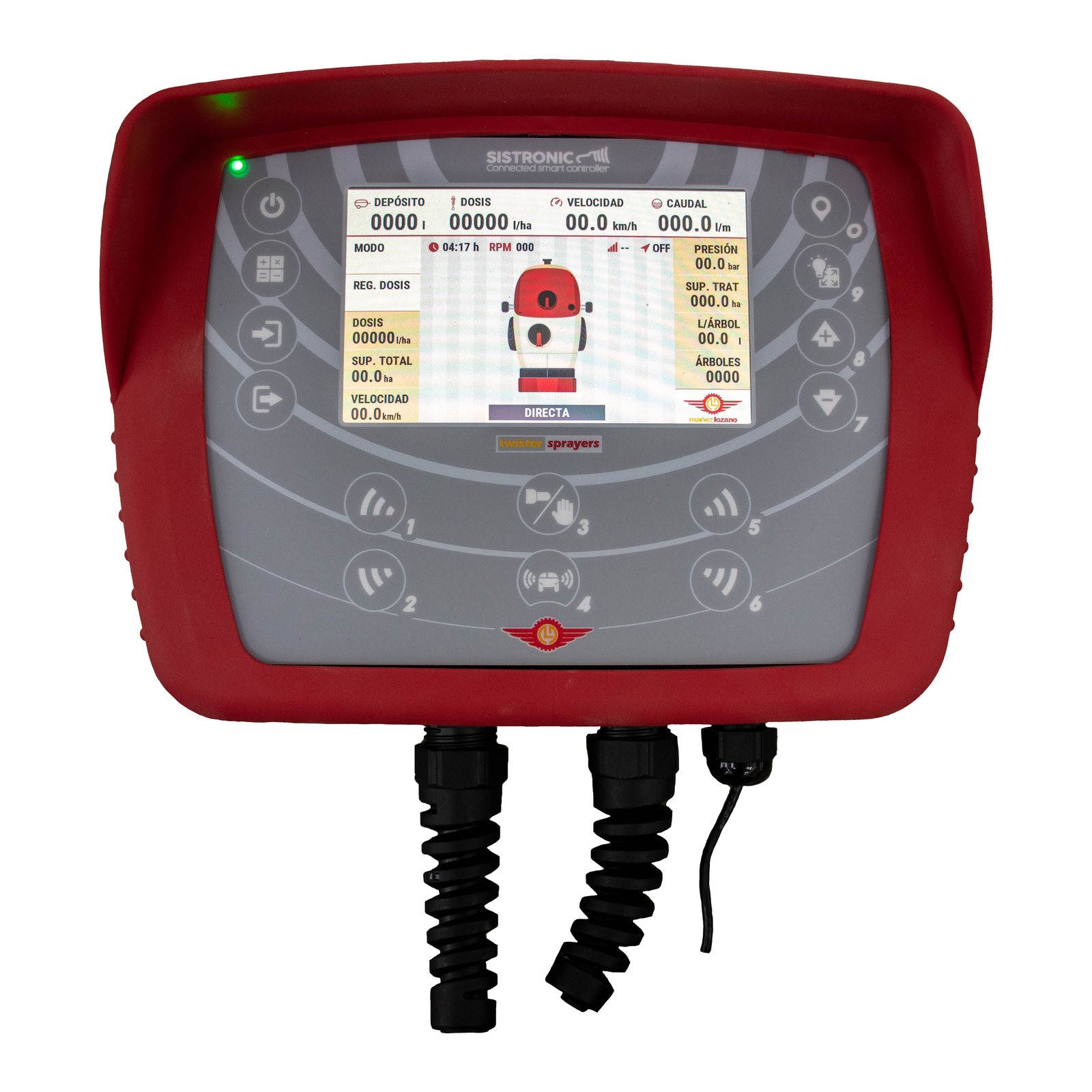
You can see them all on our control units page.
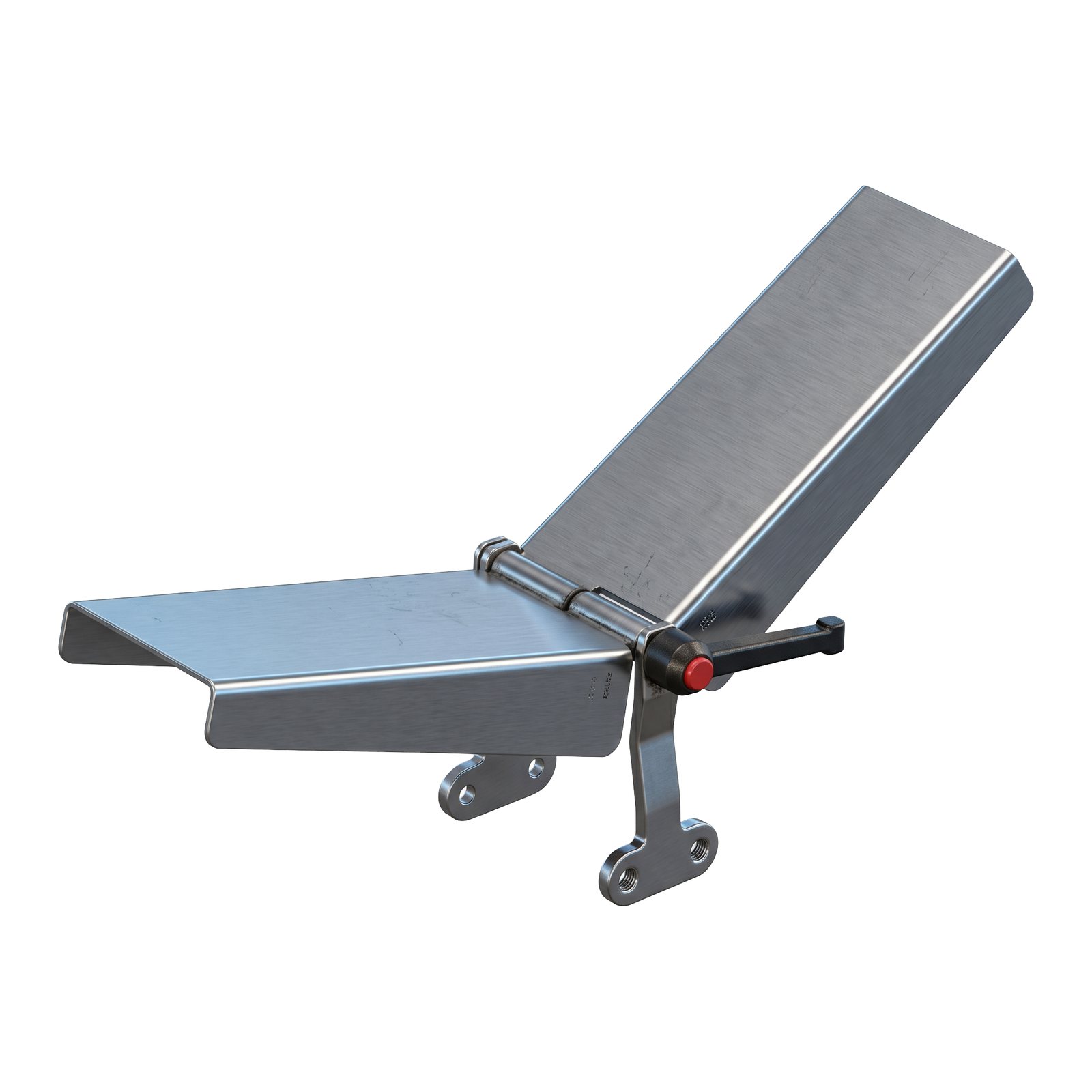
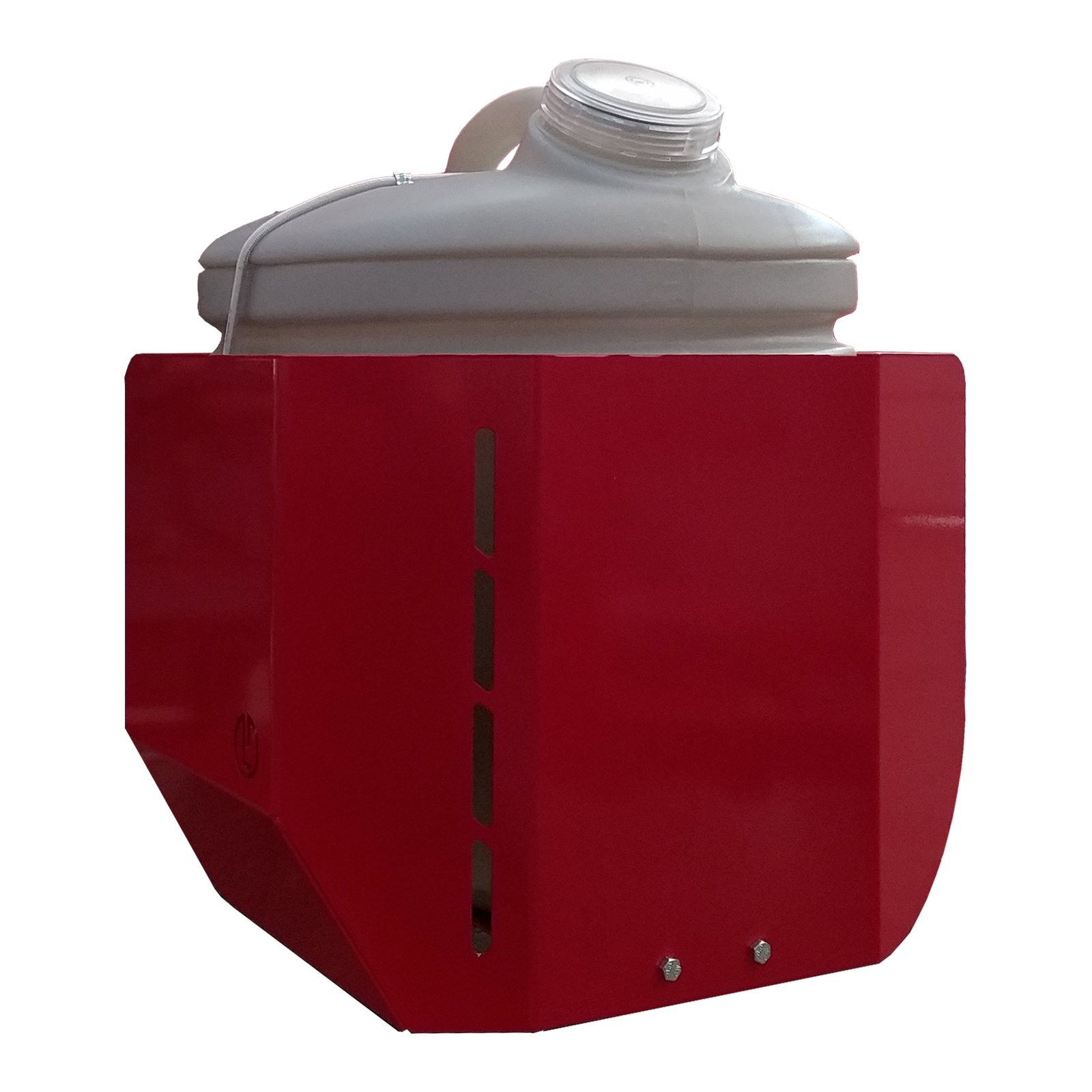
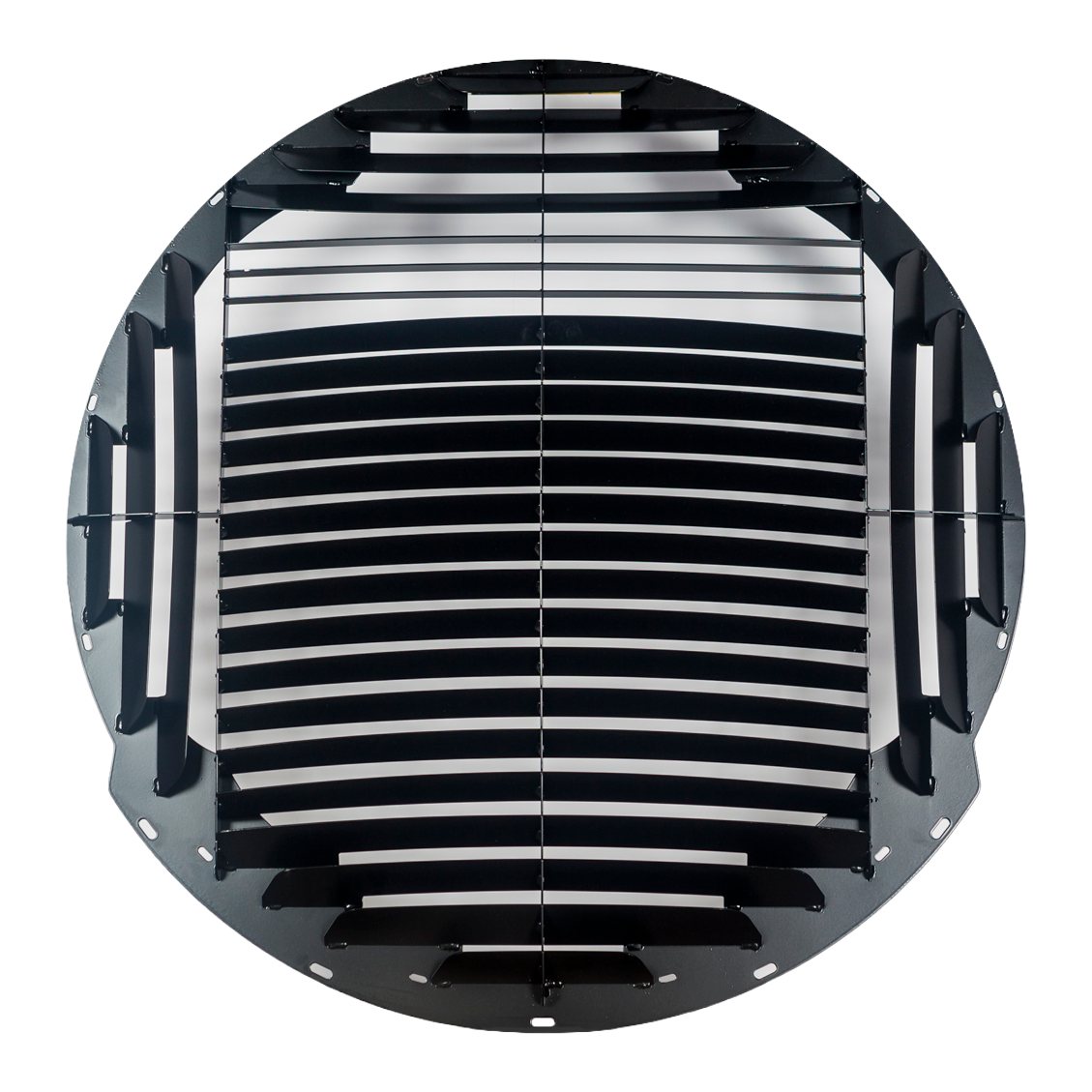
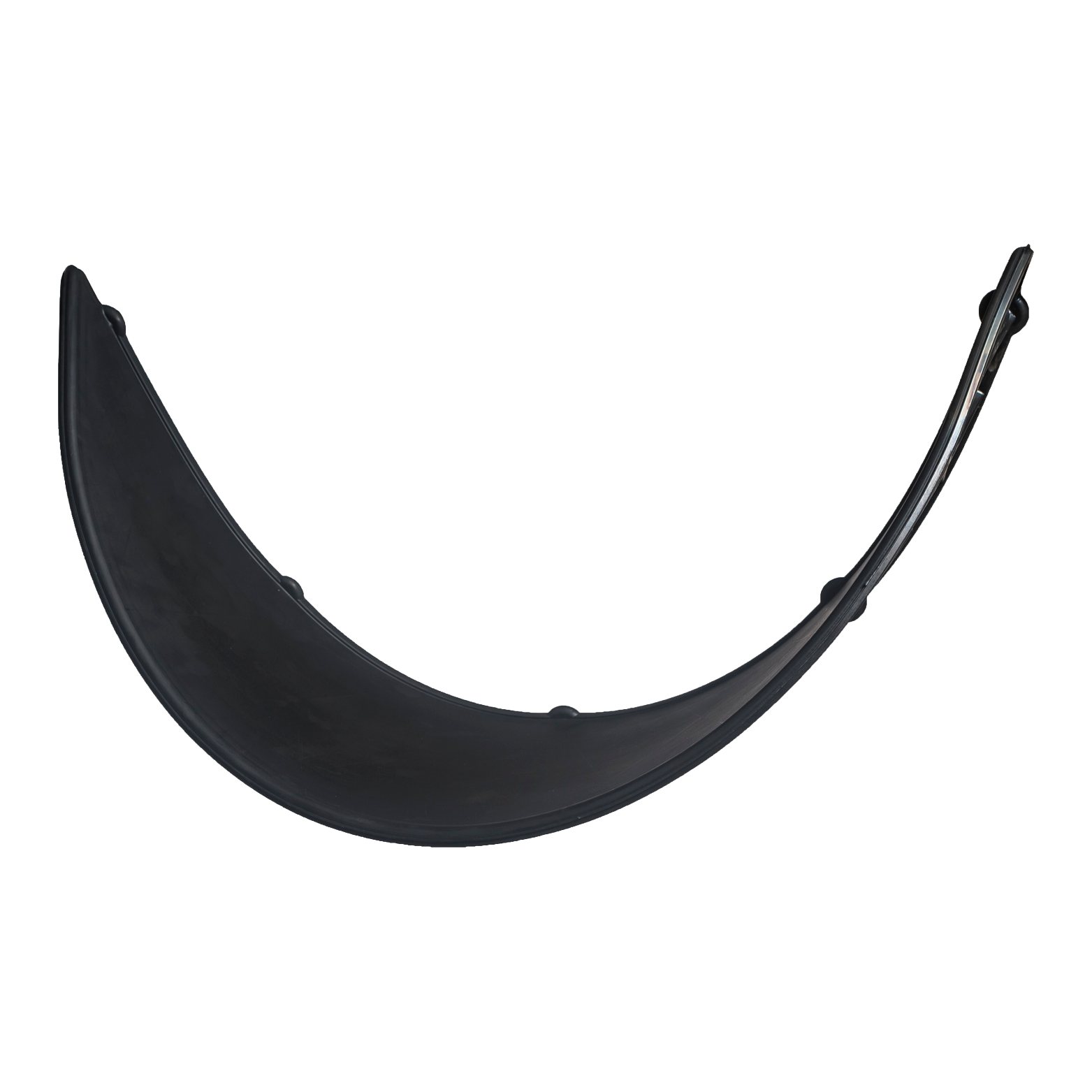
6. Optional accessories
Before closing the purchase, ask what the machine includes as standard and what can be added. Some accessories worth knowing about:
- Upper deflectors, to direct the air towards the canopy.
- Product mixer, to dissolve the product before it goes into the tank.
- Leaf guard grille and flap, which stop the fan from sucking in leaves.
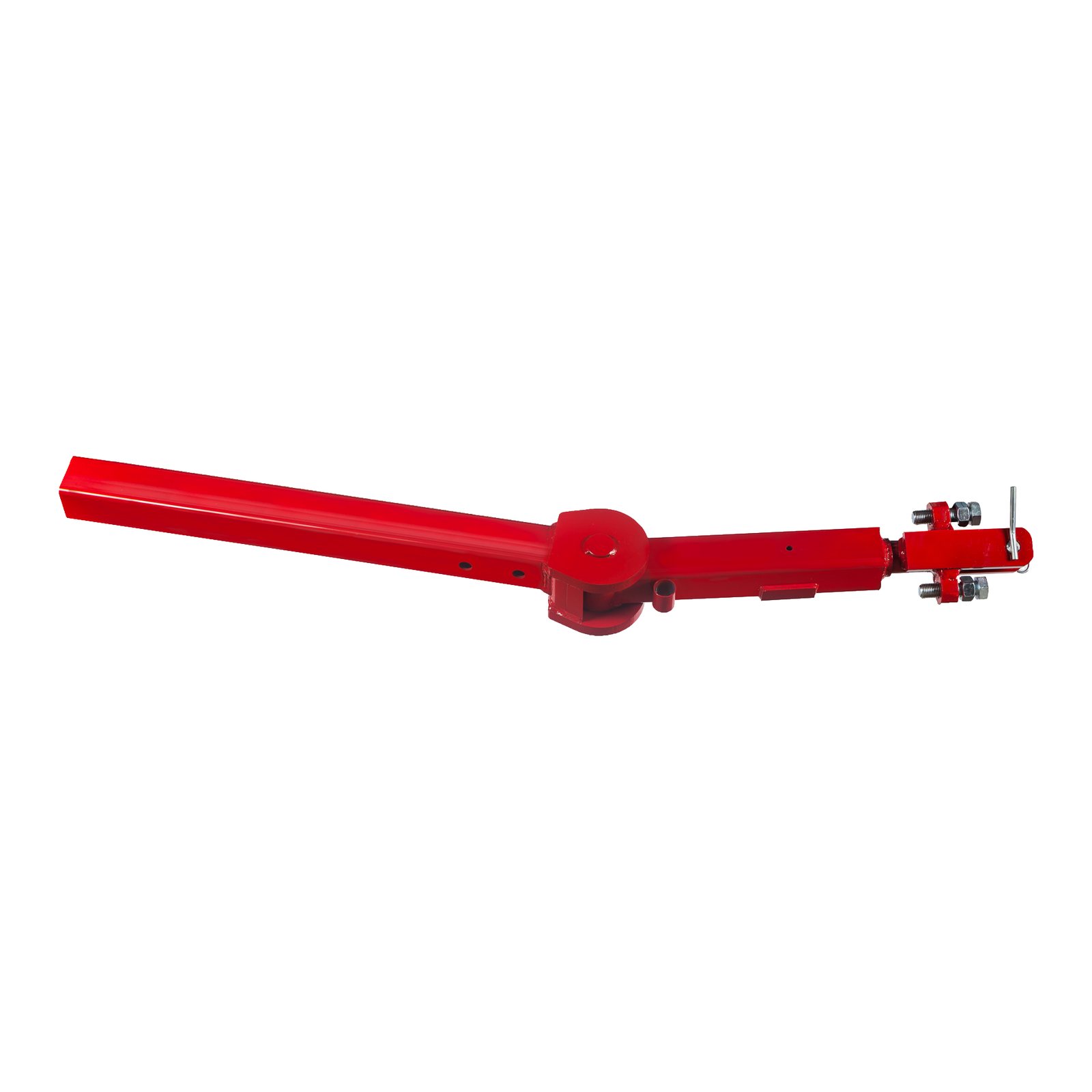
- Articulated drawbar to the tractor hitch, on some trailed sprayers.
7. After-sales service and spare parts
A sprayer works many hours every season, and sooner or later it will need a service or a part. That is why it matters so much who is behind it.
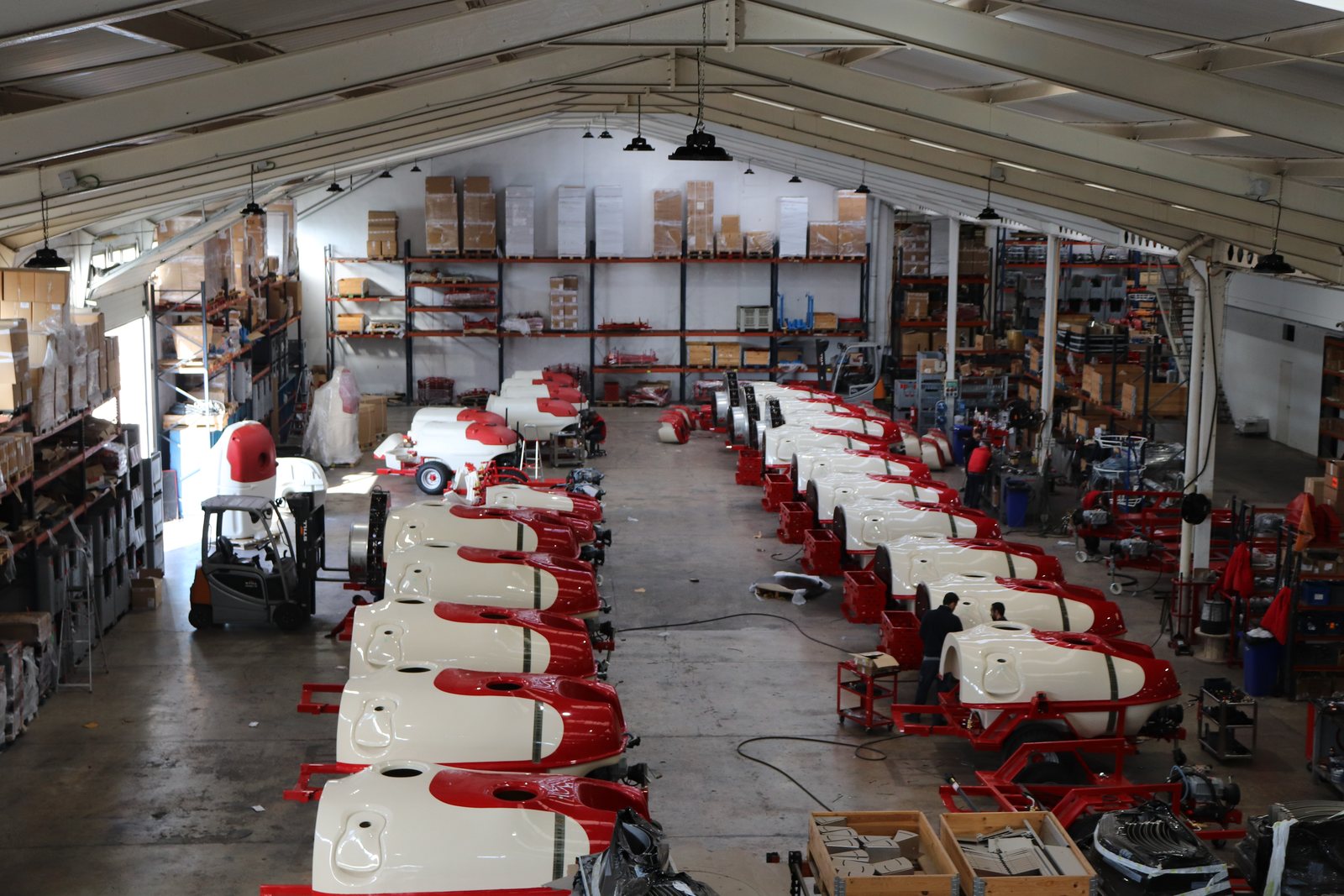
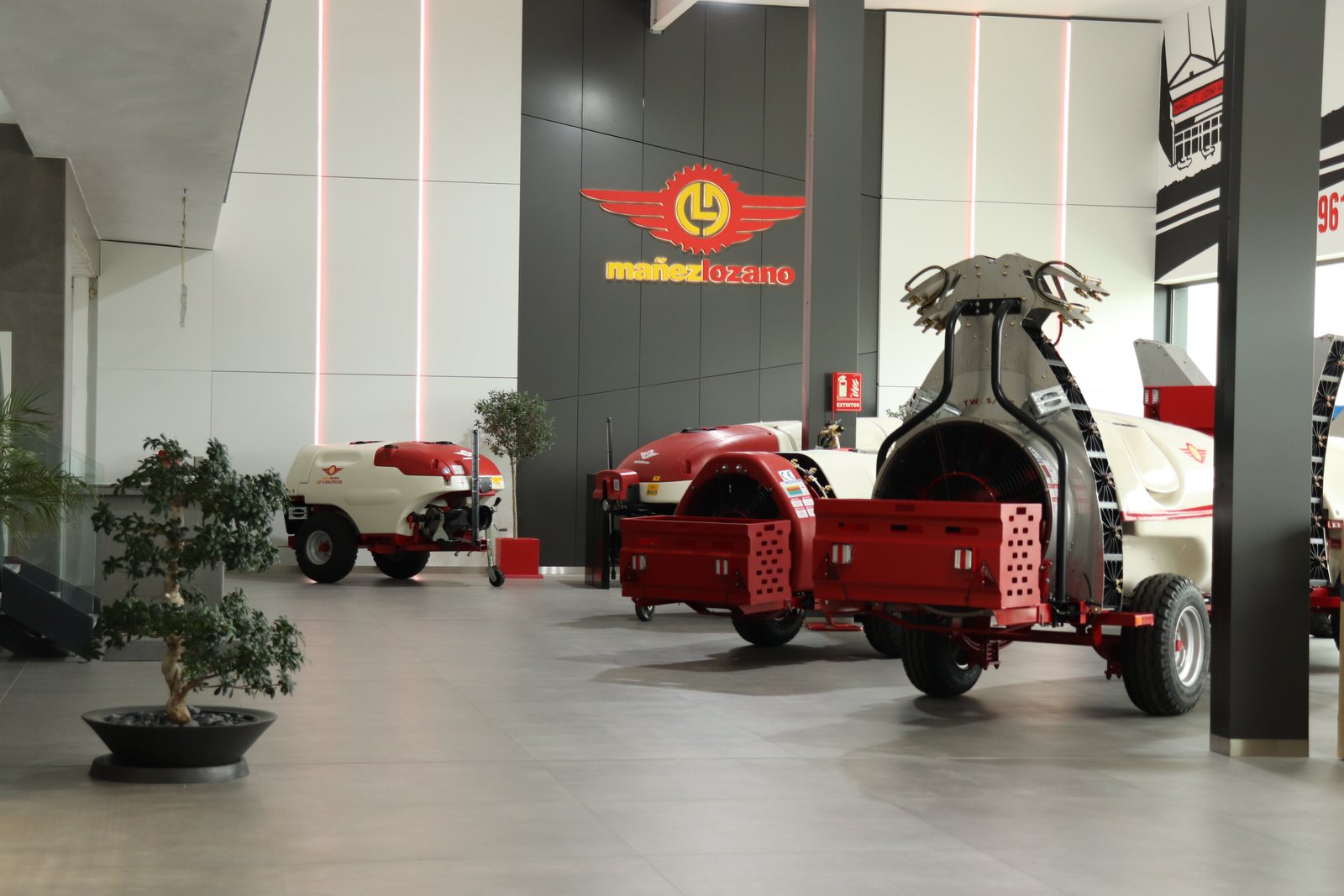
- Our own manufacturing. At Mañez y Lozano we design and manufacture most of our components in Alginet (Valencia), so all the parts are designed to work together.
- Original spare parts. In our Spare parts shop you will find the part list for each machine and its parts.
- Dealers near you. We have 33 dealers in 11 autonomous regions of Spain. Find the nearest one.
- Maintenance videos. On our YouTube channel you will find operating and maintenance tutorials.
Can we help you choose?
With these seven key points you will know what to look for. To decide on the model, capacity and equipment, talk to your dealer: they know the crops in your area and can advise you on the machine that best suits your farm.
Mañez y Lozano is the best-selling sprayer brand in Spain: No. 1 in ROMA registrations every year since 2006.