


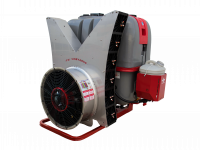
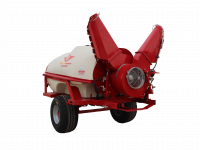
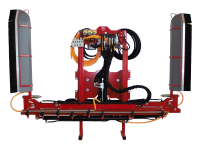
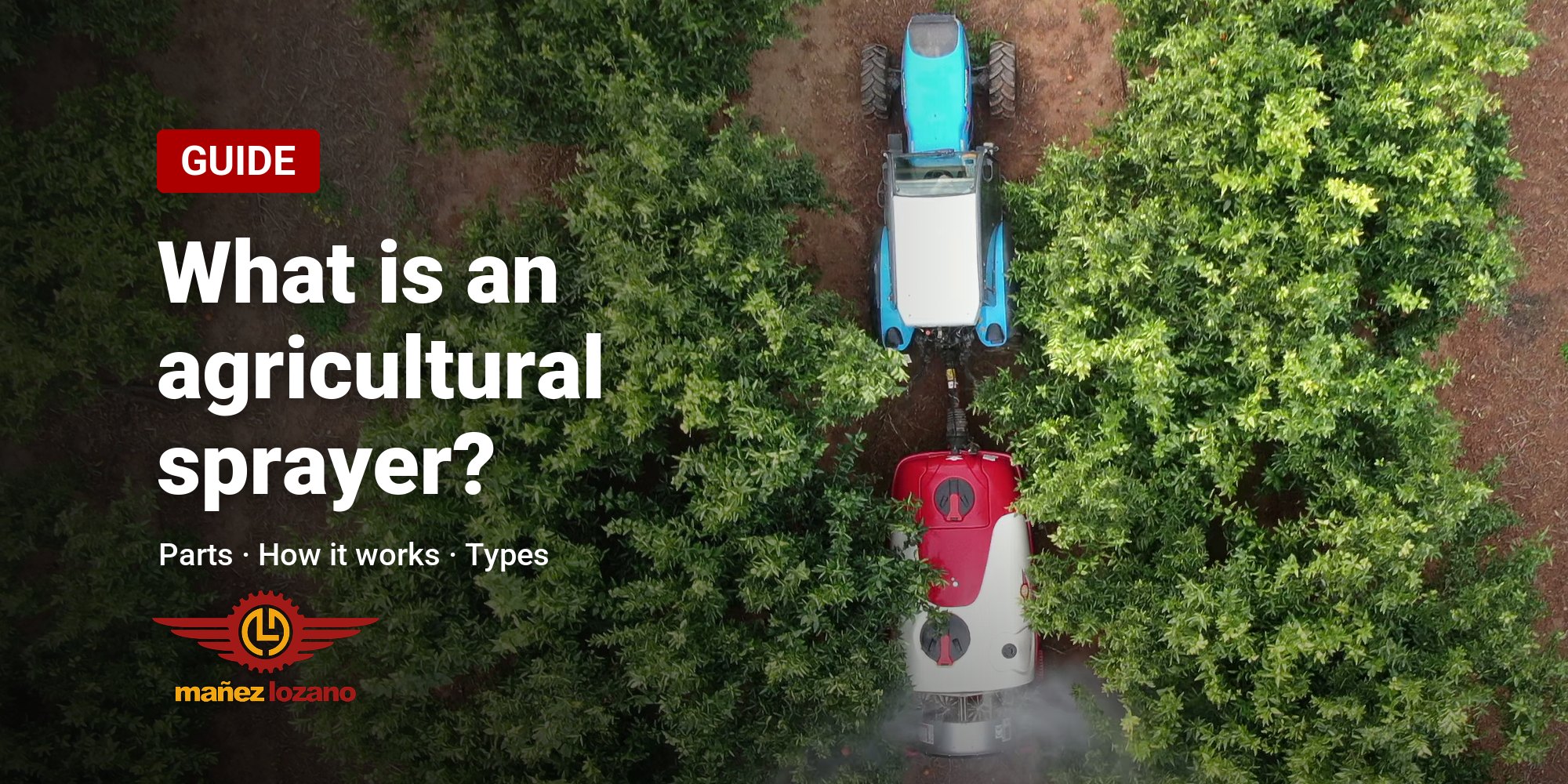
An agricultural sprayer is the machine used to apply crop protection treatments. The pump drives the spray mixture under pressure to the nozzles, which break it into fine droplets, and the fan creates an air stream that carries those droplets into the canopy. This way the product reaches every leaf. It is also known as an airblast sprayer or air-assisted sprayer.
What is a sprayer used for?
It is used to apply insecticides, fungicides, acaricides and foliar fertilisers on all kinds of crops: citrus, fruit trees, olive trees, almond trees, walnut trees, macadamia, avocado, trellised vines, overhead-trellis crops such as table grapes or kiwi, and low crops such as vegetables. The air stream moves the leaves and opens up the canopy, so the product reaches the inside of the tree. With the machine properly adjusted, the treatment is even and less product is wasted.
How does an agricultural sprayer work?
The sprayer is hitched to the tractor, which drives it through the PTO. The spray mixture follows this path:
- Tank. This is where the spray mixture, the blend of water and product, is prepared. A stirrer keeps it moving throughout the treatment so that the mixture is the same at the start and at the end.
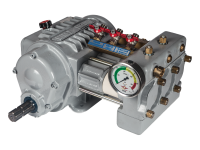
- Filters and pump. The pump draws the spray mixture through the filters and pressurises it.
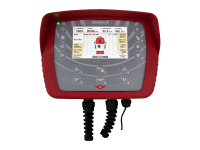
- Control unit. It regulates that pressure and opens or closes the flow of spray mixture to the nozzles.
- Nozzles. They are arranged in an arc around the air outlet and break the spray mixture into fine droplets.
- Air. At the same time, the fan in the air unit creates an air stream that picks up the droplets and carries them into the canopy.
Conventional fan or Twister system
The fan’s air system can be one of two types:
- Conventional: the air stream carries the droplets to the canopy, but it is less precise when it comes to wetting the underside of the leaves. This system is more economical and is recommended for smaller plantations or those that do not need such precise product application.
- Twister system, patented by Mañez y Lozano: spirals at the air outlet create a whirlwind that moves the leaves and gets the product onto the underside of the leaves as well. It offers greater precision and effectiveness, for plantations that need extra care. It is a more professional spraying system.


Main parts of a sprayer
These are the most important components of our sprayers, both trailed and mounted.
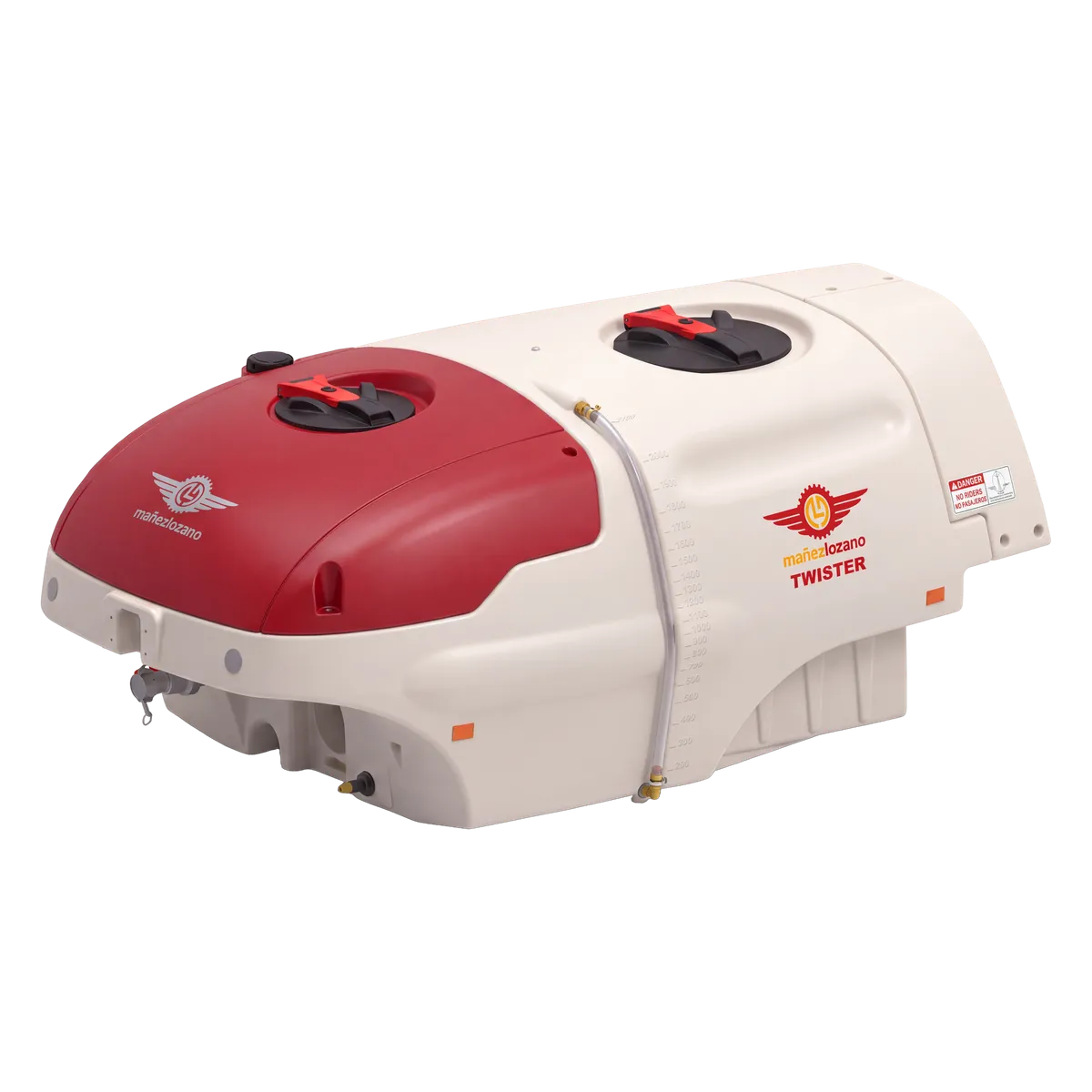
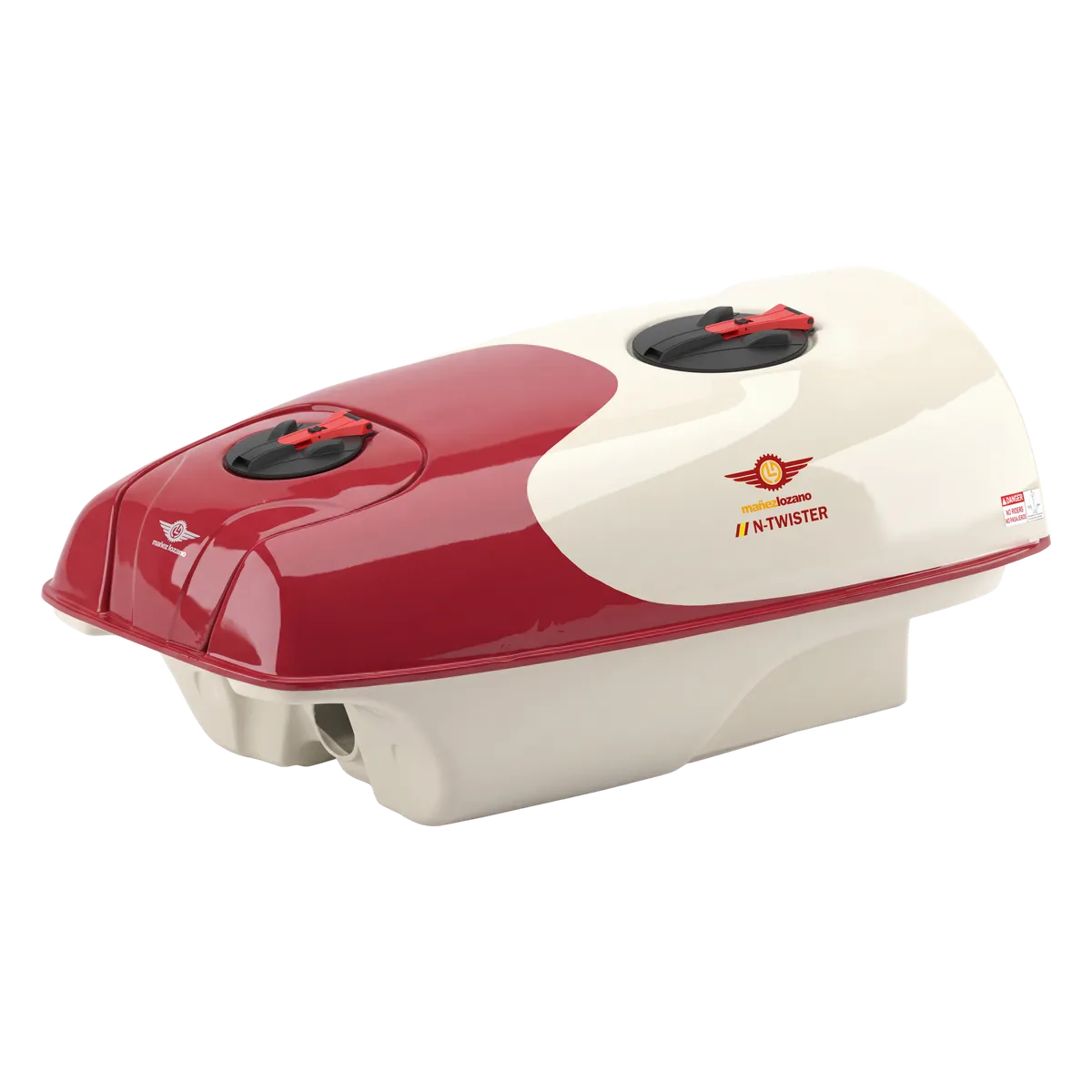
Tank. It holds the spray mixture. On trailed sprayers it can be made of polyethylene or fibreglass, and on mounted sprayers, of polyethylene. It has a level indicator and ranges from 200 litres on the smallest mounted sprayers to 4,000 litres on the largest trailed sprayers. It also carries two auxiliary tanks: the hand-wash tank, with clean water for the operator, and the washing-circuit tank, to rinse the internal circuit.
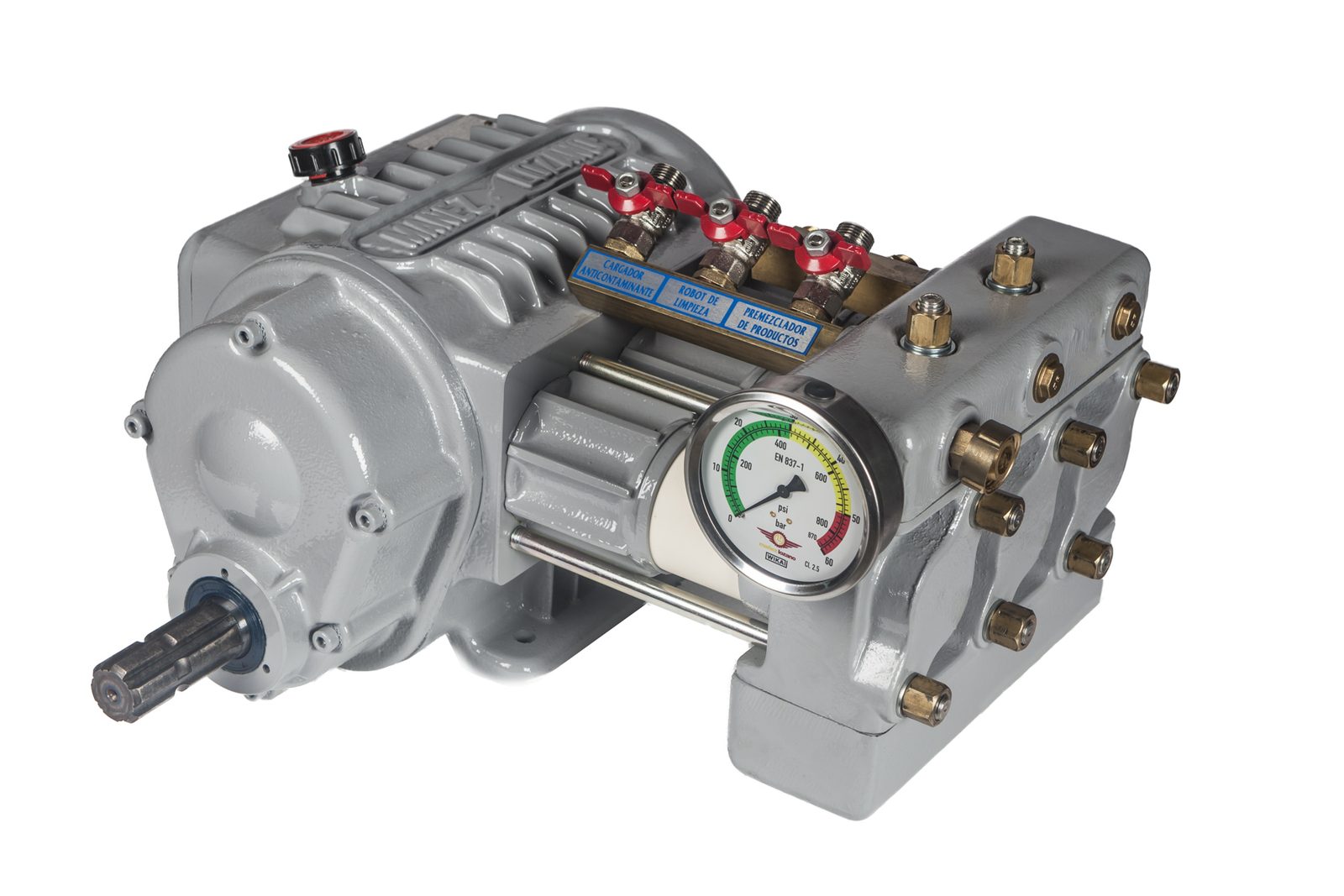
Pump. It pressurises the spray mixture. We manufacture high-pressure piston pumps, direct-drive or with reduction gear.
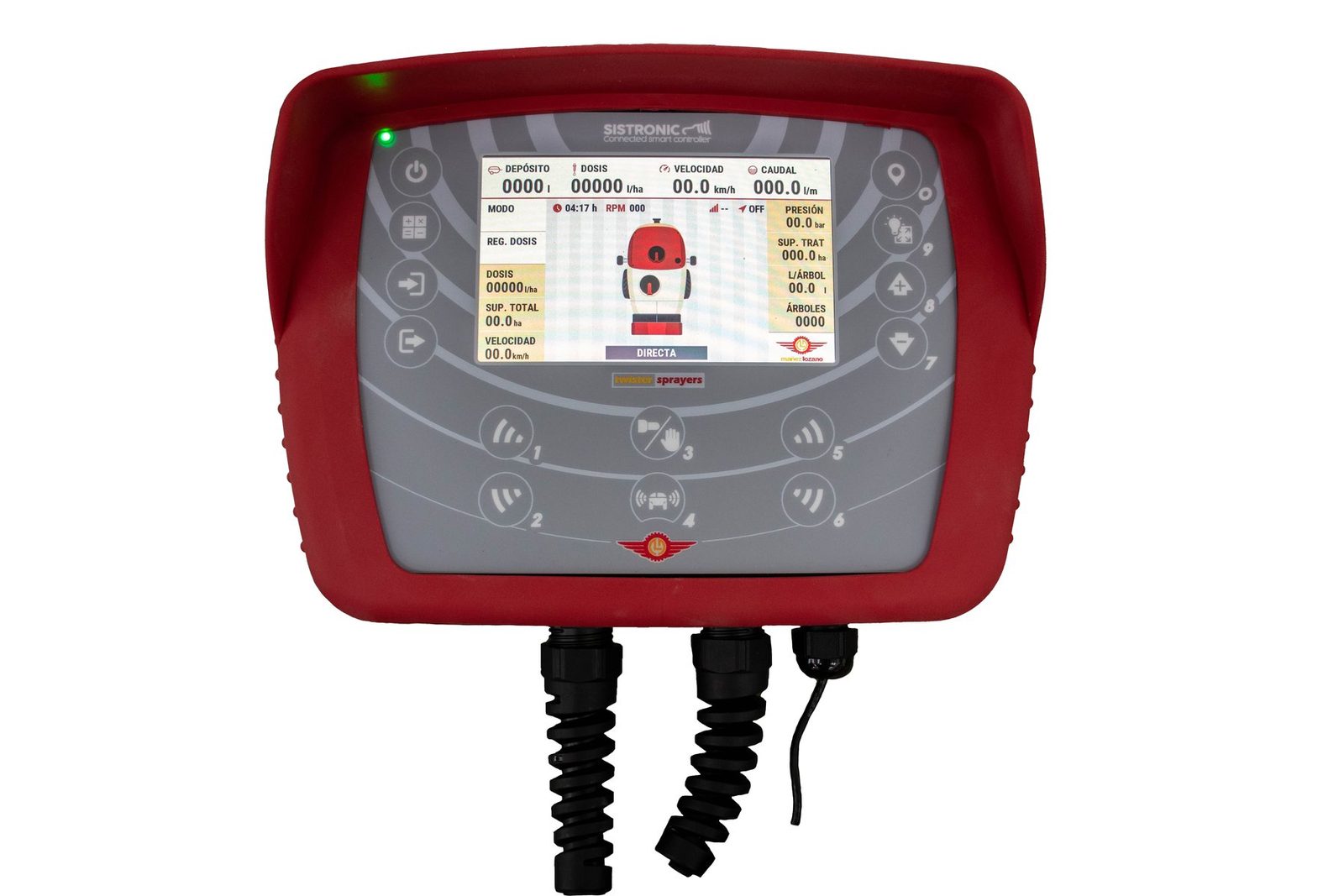
Electronic control units. Tronic keeps the litres per hectare constant even when the speed changes; Sistromatic detects the trees with two sonars and shuts off where there is no vegetation; and Sistronic 4.0 combines both functions in a single control unit, with GPS, 4G connectivity and the AppMyL app to manage and monitor the spraying work.

Air unit. It is the fan that creates the air stream. The PTO drives it through a two-speed gearbox and, on most models, a centrifugal clutch that starts and stops the propeller smoothly. The propeller has eight adjustable blades and, depending on the model, the air comes out through one, two or three channels. It can be conventional or fitted with the Twister system.
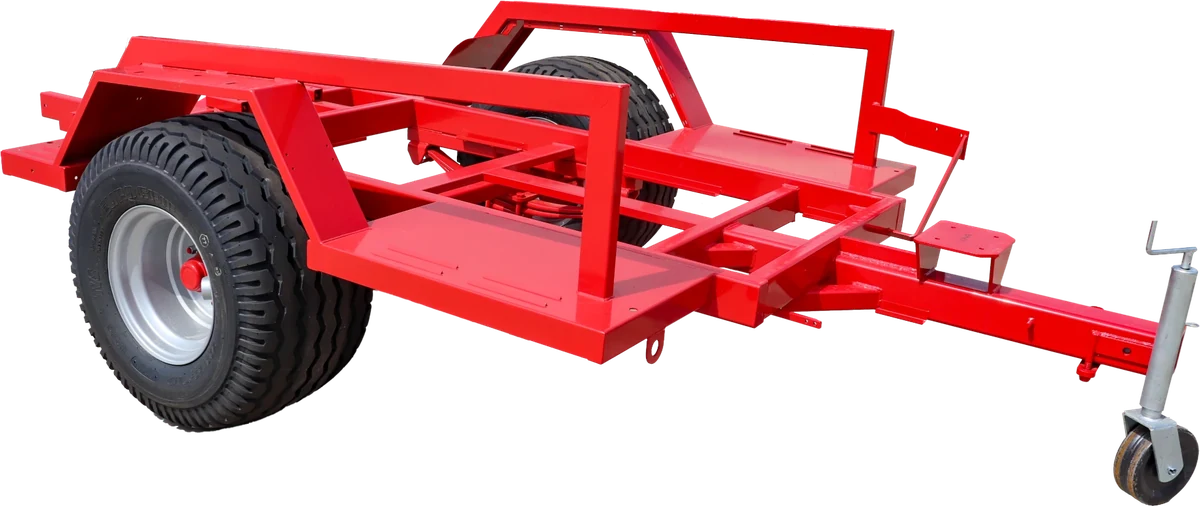

Chassis. It supports the whole unit. Three unique models for trailed sprayers (Narrow, Mega and Super) and five models covering capacities from 200 to 1,500 litres for mounted sprayers. Our chassis are made of cold-rolled structural tube.
At Mañez y Lozano we design and manufacture most of our components. That is why all the parts are designed to work together. You can find original spare parts in our online shop, together with their part lists and component tables.
Types of sprayers
Trailed or mounted
Mounted. They hang from the tractor’s three-point hitch, with no wheels of their own, so the tractor carries all their weight. They are compact and light, turn in little space at the headlands and fit into narrow rows, which is why they are the usual choice for small or irregular plots and intensive plantations. They work with small tractors, from 25 HP, and carry tanks from 200 to 1,500 litres. They include the Twister Low Crops, designed for vegetables. See the range of mounted sprayers.
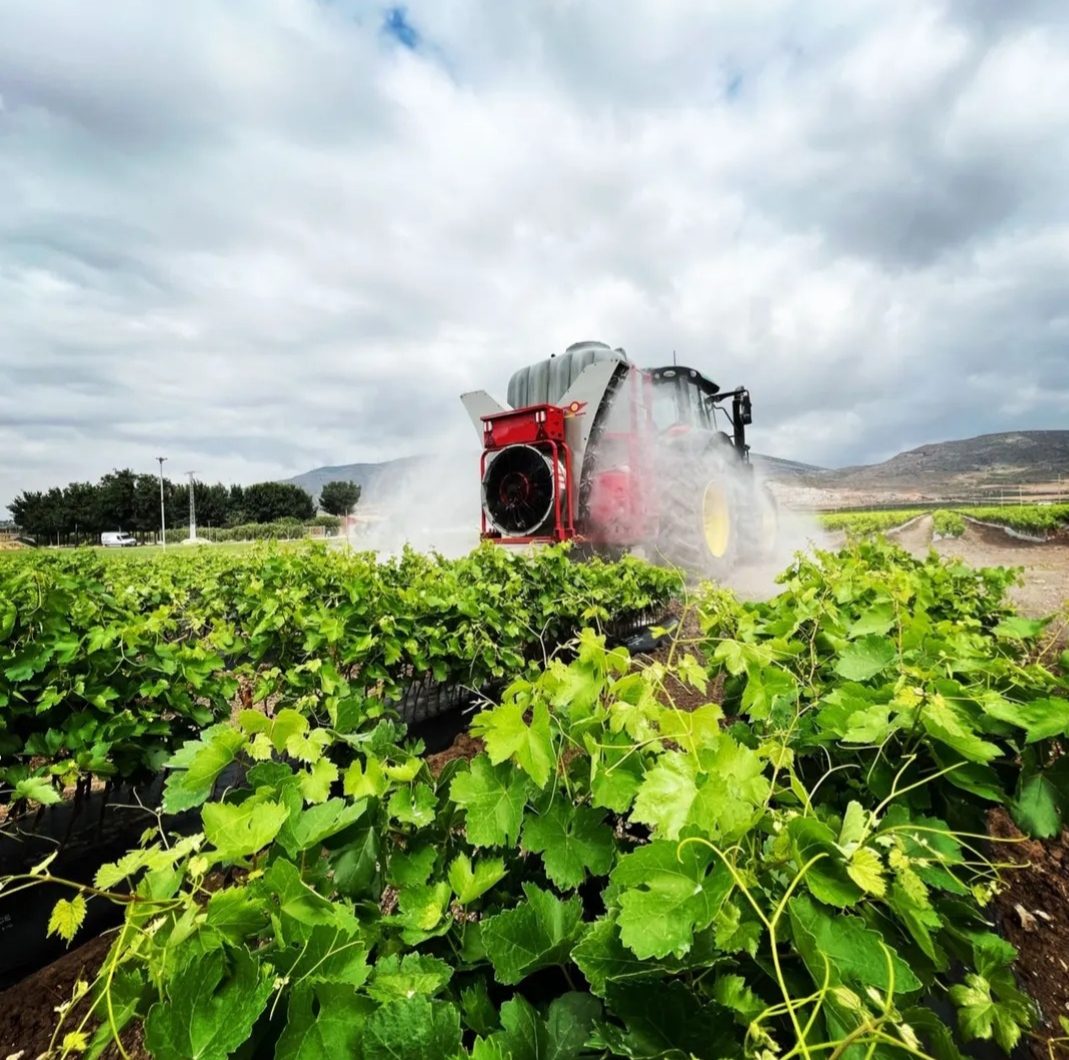
Trailed. They have their own axle, wheels and drawbar, so the weight of the spray mixture rests on their wheels rather than on the tractor. This allows them to carry tanks of up to 4,000 litres: they stop less often to refill and treat more hectares per day, which is why they are the right choice for medium and large farms. We manufacture them in three series, depending on row width and tractor:
- Narrow, for narrow rows: from 116 cm wide and 55 HP, with tanks from 800 to 3,000 litres.
- Mega, for large farms and uneven terrain: from 189 cm and 70 HP, from 2,000 to 4,000 litres.
- Super, for wider rows: from 197 cm and 85 HP, from 1,500 to 4,000 litres.
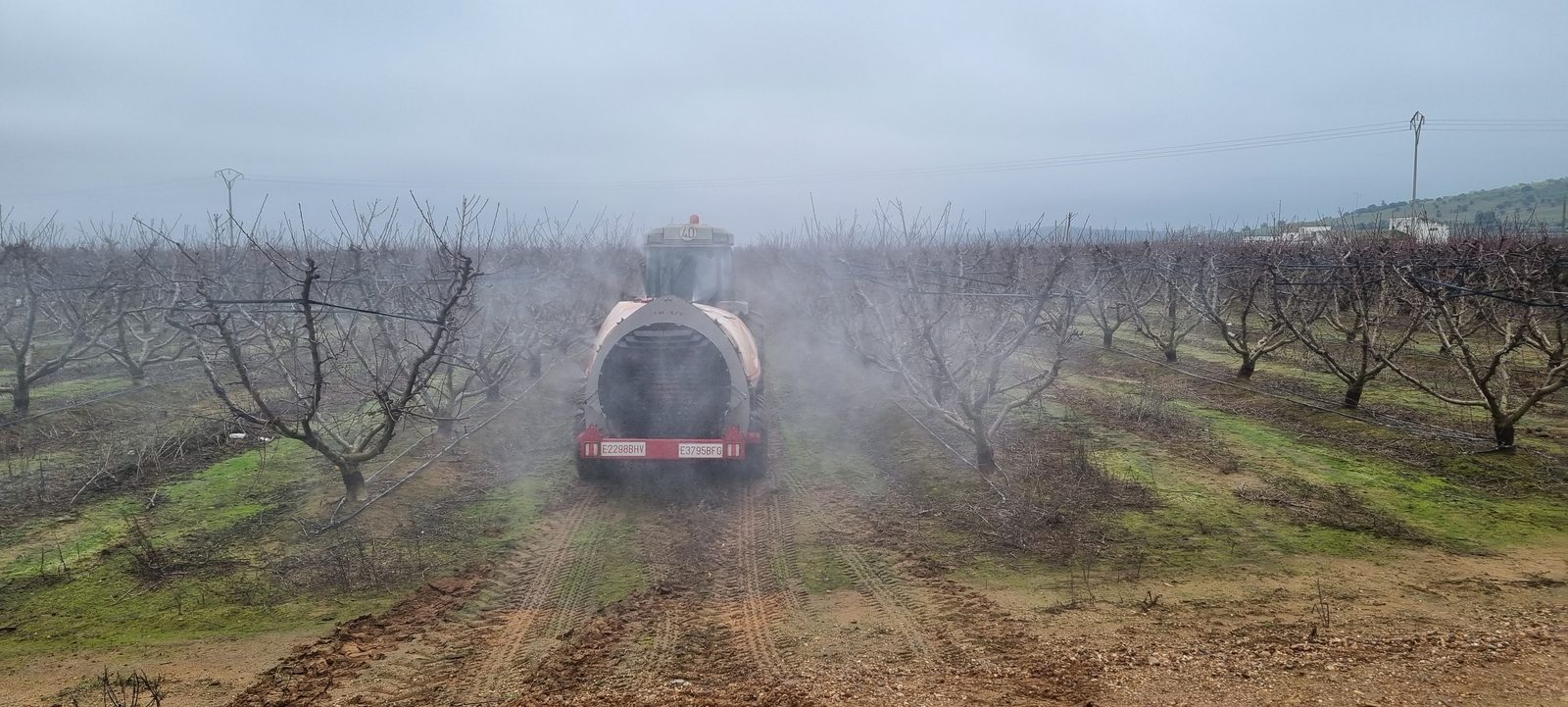
Which one to choose? It mainly depends on four things:
- Area: on small farms a mounted sprayer may be enough; on large ones, a trailed sprayer saves stops for refilling.
- Room to manoeuvre: with narrow rows or short headlands, a mounted sprayer or a Narrow trailed sprayer.
- Tractor: a mounted sprayer hangs from the tractor’s linkage, and each litre of spray mixture weighs about one kilo: check that the tractor can lift it with a full tank. A trailed sprayer needs more power, but puts no load on the linkage.
- Treatment quality: it does not depend on whether the sprayer is trailed or mounted, but on the air unit, the nozzles and good adjustment.
By how the air comes out
Conventional fan. These are the Dinamic, a very versatile traditional sprayer with one row of nozzles and two air channels, and the Citrus, with a double row of nozzles and three air channels, for crops with a dense canopy, such as citrus.
Fan with Twister system. The air comes out in a spiral and creates a whirlwind that carries the product onto the underside of the leaf as well. There are different models for each type of crop: Twister S4, S5, S6 and S8, for trees of different sizes; Twister Espaldera, specially designed for trellised vines; Twister Moon, for overhead trellises such as table grapes or kiwi; Twister Tower, with two tower-mounted fans, for fruit trees in intensive and super-intensive plantations; and the Twister Low Crops, a mounted sprayer for vegetables.
Cannon sprayers. In the Navarone series, one centrifugal cannon (or two) with an adjustable head that turns 270° blows the air over a long distance. It is the option for large trees, such as walnut or avocado trees. There is a range of trailed sprayers, with single or double cannon, and mounted sprayers.

How to adjust it: litres per hectare
Before spraying, you need to know how many litres of spray mixture per hectare you are going to apply. This depends on three things: the tractor’s forward speed, the nozzle flow rate (according to nozzle size and pressure) and the row spacing of the plantation. If the tractor goes faster, less spray mixture is applied per hectare; with more pressure or larger nozzles, more is applied.
To work it out, use our litres per hectare calculator, which includes the nozzle flow rate tables.
Basic maintenance
On our YouTube channel you will find maintenance videos and operating tutorials in Spanish and English: nozzles, seals, pump, clutch, propeller, Twister diffusers and Sistronic 4.0. And in our online shop, the part lists for each machine and original spare parts. For any other questions, feel free to contact us.
Mañez y Lozano Twister Sprayers
Mañez y Lozano is the best-selling sprayer brand in Spain: more than 30 years leading the Spanish sprayer market and No. 1 in ROMA registrations every year since 2006 (official data from the Spanish Ministry of Agriculture). We design and manufacture our sprayers in Alginet (Valencia), and we have dealers throughout Spain.